Fossil hunting · Calvert County, Maryland
Fossil hunting
at Plum Point.
The beaches around Plum Point, Maryland sit on a Miocene seabed geologists literally named for this shore, and fossil shark teeth from more than 40 species wash out of the Calvert Cliffs and onto the sand all year long. Here is how to find one.

Low tide below the cliffs: the whole hunt is looking down at the right moment.
How to hunt
Four rules, one bucket.
Go at low tide, after a storm.
Wind and waves do the digging for you. Fresh teeth wash out of the cliffs and settle along the tide line, and the first person to walk the beach gets first pick. Early morning is prime time.
Look for glossy black triangles.
Fossil teeth read black, gray, or chocolate brown against the sand, with a shine that shell fragments don't have. Walk slowly, scan the wet band where waves just receded, and let your eyes adjust.
Check the shell hash.
Teeth collect wherever the waves pile broken shell and gravel. Sift a handful of that coarse material at the waterline and you'll often find small teeth hiding in it. A kitchen colander works fine.
Keep what the tide brings.
No permit is needed for casual surface collecting at the public beaches listed below. Whatever you find on the sand is yours, and a found shark tooth is a better souvenir than anything in a gift shop.
House rule from the locals: hunt the beach, never dig into the cliffs. They are unstable and protected, everywhere along this shore.
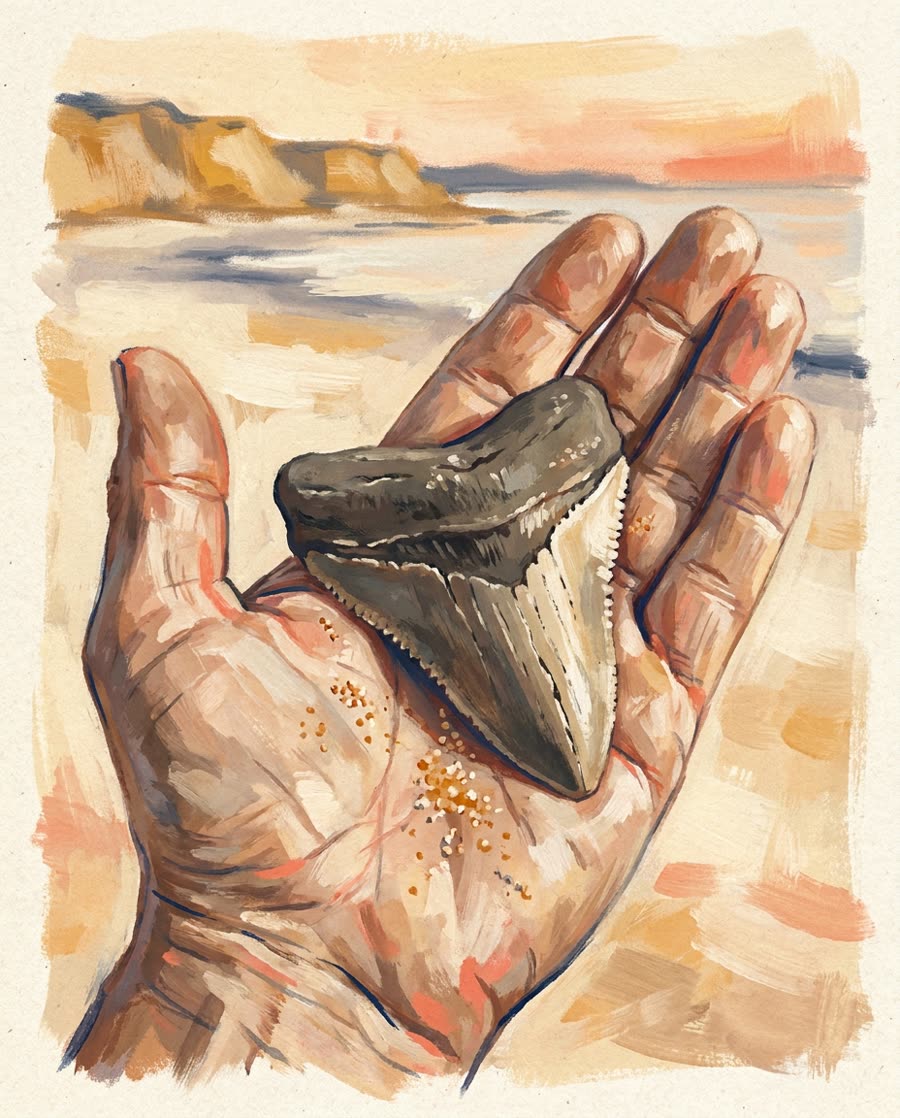
The prize: a megalodon tooth, straight off the sand.
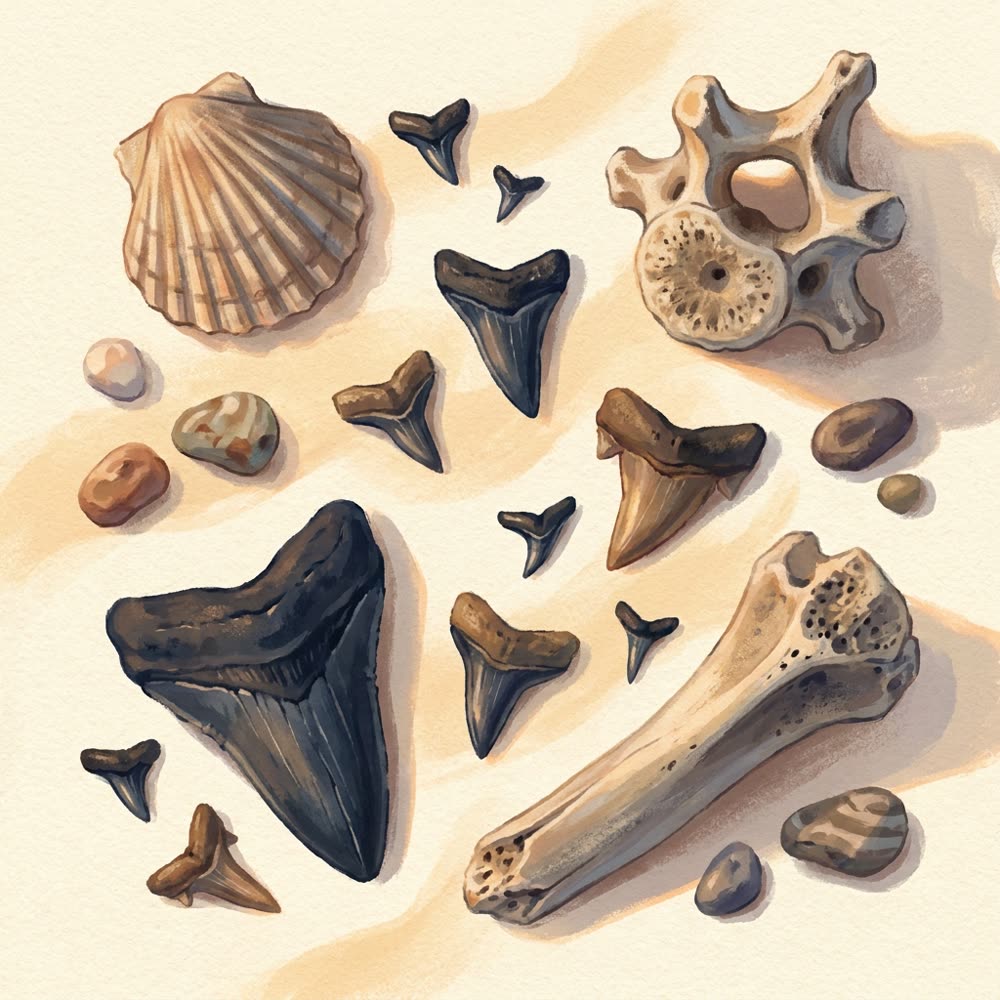
What you might find
40+ species of shark, one beach.
Megalodon
The giant. Rare, unmistakable, and the reason people fly here to walk beaches.
Snaggletooth
Curved, serrated, and extinct; a Calvert Cliffs classic.
Mako & tiger shark
Slender points and notched blades, often in beautiful condition.
Sand tiger
Needle-thin teeth, the most common find once you know them.
Ray plates
Ribbed, bar-shaped crushing plates from ancient stingrays.
Whale & more
Vertebrae, ear bones, fossil scallops, and 130+ species of shellfish.
Where to go
The fossil beaches, nearest first.
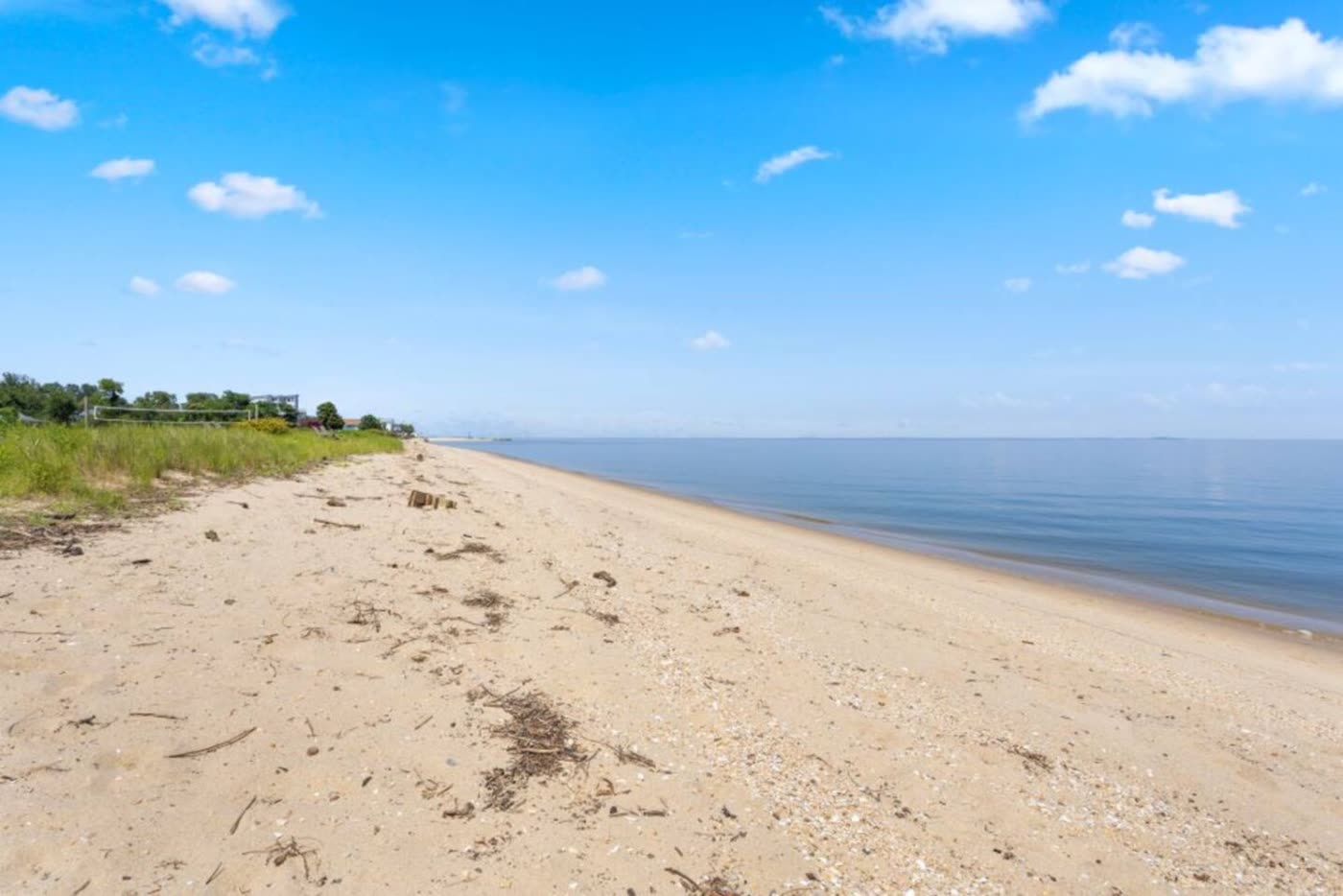
The beach out front
The sand in front of the cottages sits on the same fossil formation as the cliffs. Teeth turn up here regularly, especially after a blow. Start your streak before breakfast.
Breezy Point Beach & Campground
The county-run beach next door, open May through October. Half a mile of sand with a swimming area and picnic tables, and a reliable producer of small teeth.
Brownie's Beach (Bayfront Park)
At the south end of Chesapeake Beach, the area's most famous shark-tooth beach. The cliffs begin right here, so material is always fresh. Go early; regulars hunt it daily.
Flag Ponds Nature Park
A quieter fossil beach below undeveloped cliffs, with boardwalk trails through the dunes. Summer weekends only in the off season; check hours before you go.
Calvert Cliffs State Park
The famous one. A flat, family-friendly trail of about two miles leads from the parking lot to a fossil beach directly beneath the big cliffs. Bring water and a sifter.
Calvert Marine Museum, Solomons
Not a beach, but the payoff: a 35-foot megalodon skeleton, the region's fossil record at scale, and a screwpile lighthouse out back. Our Solomons guide plans the whole day.
Quick answers
Fossil hunting FAQ.
Do I need a permit?
No. Casual surface collecting for personal use is allowed at the public fossil beaches listed above. Digging into the cliffs is prohibited everywhere; they are unstable and protected.
When is the best time to go?
Low tide, especially after a storm or a windy night, and the earlier the better. Winter and early spring have the fewest crowds and some of the best hunting of the year.
Will kids actually find teeth?
Yes. Small teeth are common once your eyes adjust; look for glossy black triangles about the size of a fingernail. Big teeth are rare, and that is exactly what makes the hunt.
What should we bring?
A bucket or zip bag, a small sifter or kitchen colander, water shoes in summer, and patience. Everything else is optional.
Hunt at sunrise.
Sleep on the beach you hunted.
Six pet-friendly waterfront cottages with free kayaks, fire pits, and fossils out front. From $198 a night.
Find your cottage